Scientists thought this Bird was Gone Forever, now it’s returning to its Ancient home
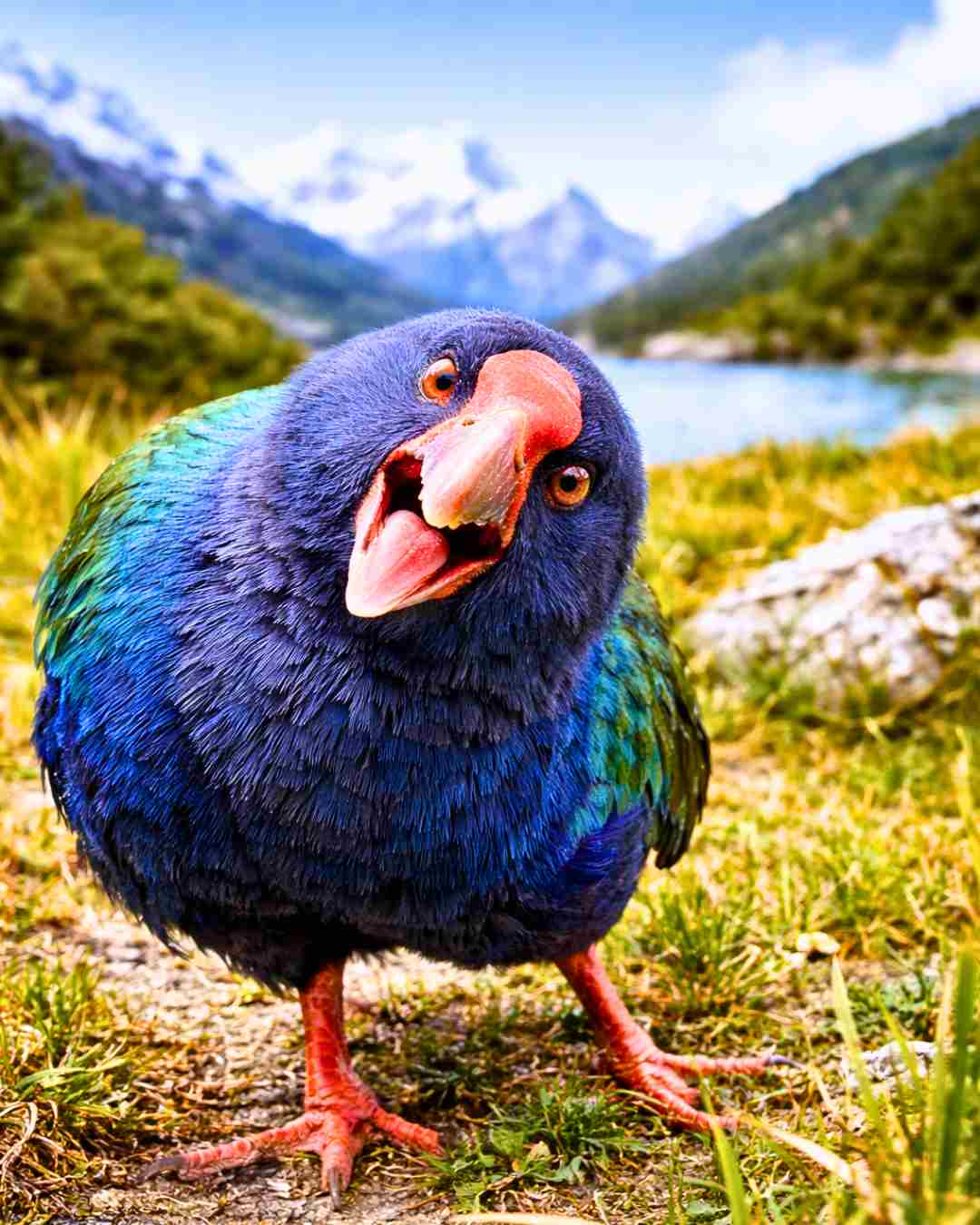
In one of New Zealand’s most remarkable conservation milestones, 18 takahē have recently been released back into the wild at a protected nature reserve near Lake Wakatipu.
Conservation teams plan to reinforce this success with the release of seven more birds in October, followed by another ten early next year, as the species slowly establishes its third independent wild breeding population.
The scale of this achievement becomes clearer when considering history. The takahē was officially declared extinct at a time when cars were still a novelty on the streets of London.
This striking, flightless bird—shimmering with deep blue and green plumage—embodies New Zealand’s prehistoric heritage. Evolving on an isolated island with no native land mammals, the takahē was catastrophically vulnerable once predators such as stoats, ferrets, and rats were introduced.
Against all odds, the species was rediscovered after the Second World War, sparking decades of intensive conservation efforts.
Since then, specialists have taken an active role in safeguarding its future. Eggs found in the wild are carefully removed and raised in secure facilities, where they are protected from invasive predators that would otherwise destroy them.
Early breeding programs relied on an unusual but effective method: sock puppets shaped like adult takahē heads were used to raise chicks without imprinting them on humans. This pioneering technique eventually evolved into breeding programs conducted within highly controlled environments, dramatically improving survival rates.
Another crucial factor in the takahē’s recovery has been aggressive predator control, which has helped drive an average annual population growth of around 8%.
Lake Wakatipu, located on New Zealand’s South Island, is the country’s longest lake, winding for nearly 50 miles through the Waimāori Valley. Its surrounding alpine grasslands provide ideal habitat for the one-and-a-half-foot-tall bird, offering both food and protection.
“They look almost prehistoric,” says Tūmai Cassidy of Ngāi Tahu, the Indigenous group that acts as kaitiaki (guardians) of the land around the lake. “They’re incredibly broad and bold.”
Seen head-on, Cassidy adds, the birds appear almost perfectly round—“like a tiny Earth balanced on a pair of bright orange legs.”
For the Māori people, the takahē’s return carries deep cultural meaning. Historically, the bird’s feathers were woven into ceremonial cloaks, and its calls echoing through the valley were once a familiar and treasured sound. With the takahē’s gradual return to the wild, those voices may soon once again rise from the slopes of Lake Wakatipu.