Extinct Galápagos Tortoise just found ALIVE after 113 years
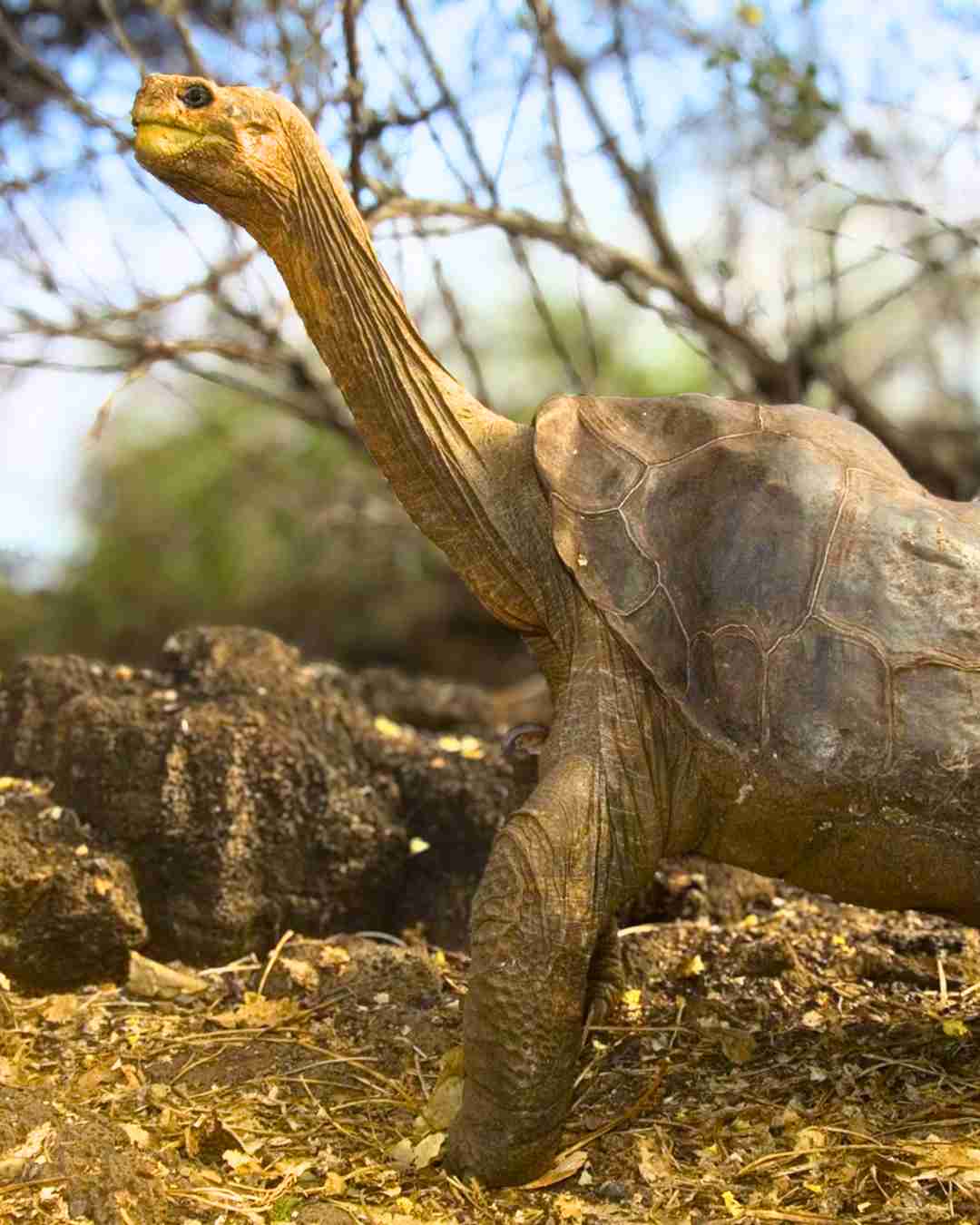
A giant tortoise species once believed to have vanished more than a century ago has made an extraordinary return in the Galápagos Islands.
Ecuador’s environment minister, Marcelo Mata, confirmed that an adult female Fernandina Giant Tortoise has been rediscovered, stunning conservationists and scientists worldwide.
For centuries, giant tortoises across the Galápagos archipelago were heavily hunted by European explorers and later settlers, primarily for their meat. This relentless exploitation pushed several species to the brink of extinction — and some were thought to have disappeared forever.

The remarkable discovery occurred during a scientific expedition to Fernandina Island, located in the western part of the Ecuadorian archipelago. The mission was funded by Animal Planet as part of its documentary series “Extinct or Alive.”
Leading the expedition was wildlife biologist Forrest Galante, who trekked across nearly three miles of hardened lava flows before making the find. The tortoise was discovered hidden beneath dense vegetation, buried deep within the rugged volcanic terrain.
“As a biologist and someone who has dedicated my life to the pursuit of animals believed extinct, this is by far my greatest scientific accomplishment and proudest moment,” said Mr Galante.

“Much like Lonesome George was an icon of extinction, I believe she can become an icon of wildlife hope. She’s the rarest tortoise, if not animal, in the entire world and one of the largest discoveries in the Galápagos in the last century.”
Despite the optimism surrounding her survival, the future of the Fernandina Giant Tortoise remains uncertain. Fernandina is the youngest and most volcanically active island in the Galápagos, and ongoing volcanic activity — including lava flows — is considered the species’ greatest existential threat.
The tortoise was located by members of the Galápagos National Park in collaboration with the U.S.-based NGO Galápagos Conservancy. Of the 14 known giant tortoise species native to the Galápagos, scientists believe only ten survived the combined pressures of human colonization and overhunting.

The rediscovered female is described as having a large body, a smooth shell, and a pink head, though authorities have not released additional biological details.
Susanna Dinnage, Global President of Animal Planet, expressed strong emotion following the announcement:
“We are moved and excited about this historic news. As the rate of animal extinction is widely debated, it gives us great hope that some species are surviving against the odds and that at Animal Planet we can do our bit to celebrate and support them.”

Minister Mata later shared an image of the tortoise on social media, noting that the only other known specimen of this species had been collected in 1906. A spokesperson for Galápagos Conservancy added:
“While thought to be extinct due to volcanic eruptions in past centuries, there have been anecdotal observations indicating that there may indeed still be a very few left on the island.”
Although unconfirmed sightings and indirect evidence such as droppings had been reported over the years, the species was officially listed on the IUCN Red List as “critically endangered (possibly extinct).”
“These sightings and signs, though needing verification through more extensive surveys, indicate the possibility that the species may remain extant in exceedingly small numbers,” the IUCN stated.

In 2015, Ecuador also announced the discovery of a new giant tortoise species on Santa Cruz Island, later named Chelonoidis donfaustoi in honor of Fausto Llerena. Llerena famously cared for Lonesome George, the last known Pinta Island tortoise (Chelonoidis abingdonii).
Lonesome George died in 2012, marking the extinction of his species. Scientists believe that giant tortoises originally reached the Galápagos between two and three million years ago, drifting approximately 600 miles from South America on floating vegetation.
These reptiles were already massive before arriving on the islands. Charles Darwin himself spent five weeks in the Galápagos during his second voyage, documenting tortoises and finches that later played a critical role in shaping his theory of evolution by natural selection.