You won’t Believe this Bird is the size of a BEE, and it actually Exists
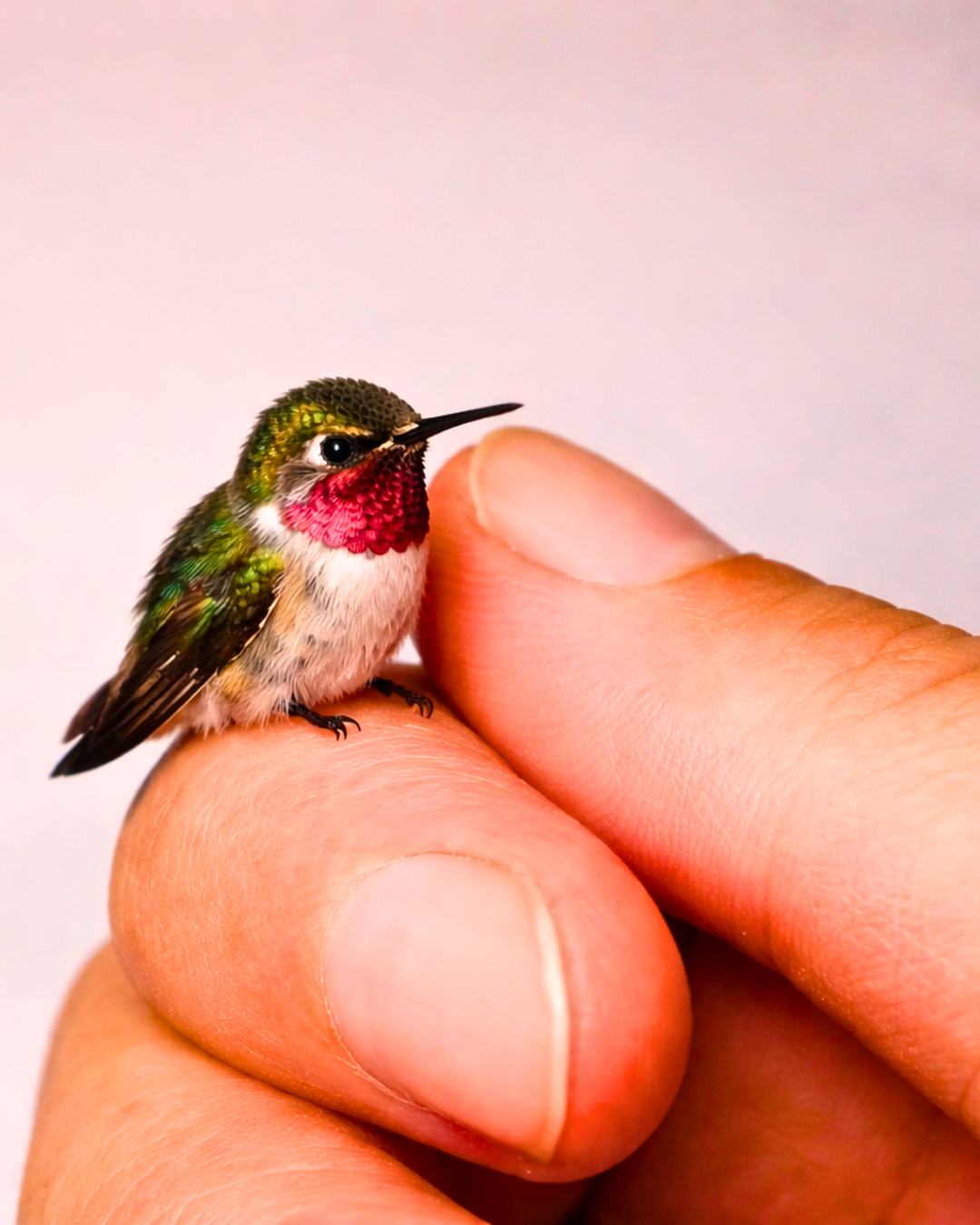
Bee hummingbirds are often confused with other hummingbird species found along the West Coast of the United States or even in Alaska during summer. However, the bee hummingbird does not live in North America at all.
In reality, the bee hummingbird is endemic to Cuba, meaning it is found nowhere else in the world.
This tiny bird is the smallest bird species on Earth and one of nature’s most extraordinary evolutionary wonders. Measuring just 5–6 centimeters in length and weighing less than 2 grams, it is roughly the size of a bee—hence its name.

Despite its size, the bee hummingbird is easily distinguished from insects by its dazzling, iridescent feathers. When it hovers in flight, the sunlight reflects off its plumage, making it look like a living, flying gemstone.
During the breeding season, which begins around March, the males undergo a striking transformation.
They develop shimmering green bodies with brilliant red or pink feathers on the head and throat, which they proudly display through energetic aerial dances and constant singing to attract females.

Females, by contrast, are more subtly colored. They usually have bluish-green feathers with a paler underside and darker markings on the neck and belly, helping them remain camouflaged while nesting.
Bee hummingbirds lay eggs that are incredibly small—about the size of a coffee bean. Relative to the bird’s body size, these eggs are surprisingly large. For comparison, a ruby-throated hummingbird’s egg can weigh nearly 17% of the female’s body weight, far more proportionally than many larger birds.
Because the male’s bright coloration could attract predators, the female typically does not allow the male to approach the nest once the eggs are laid.

Like all hummingbirds, bee hummingbirds primarily feed on nectar, but they also consume small insects and spiders to meet their protein needs. A single hummingbird may visit up to 1,500 flowers per day, playing a crucial role in pollination and supporting plant reproduction.
Unlike many hummingbird species, bee hummingbirds do not migrate. They remain in Cuba year-round, thriving in the island’s warm, subtropical climate.
Sadly, the bee hummingbird is currently classified as Near Threatened, with its population declining due to habitat loss and environmental pressures.

This remarkable little bird is a reminder of how fragile and precious nature can be—and why protecting its habitat is more important than ever.